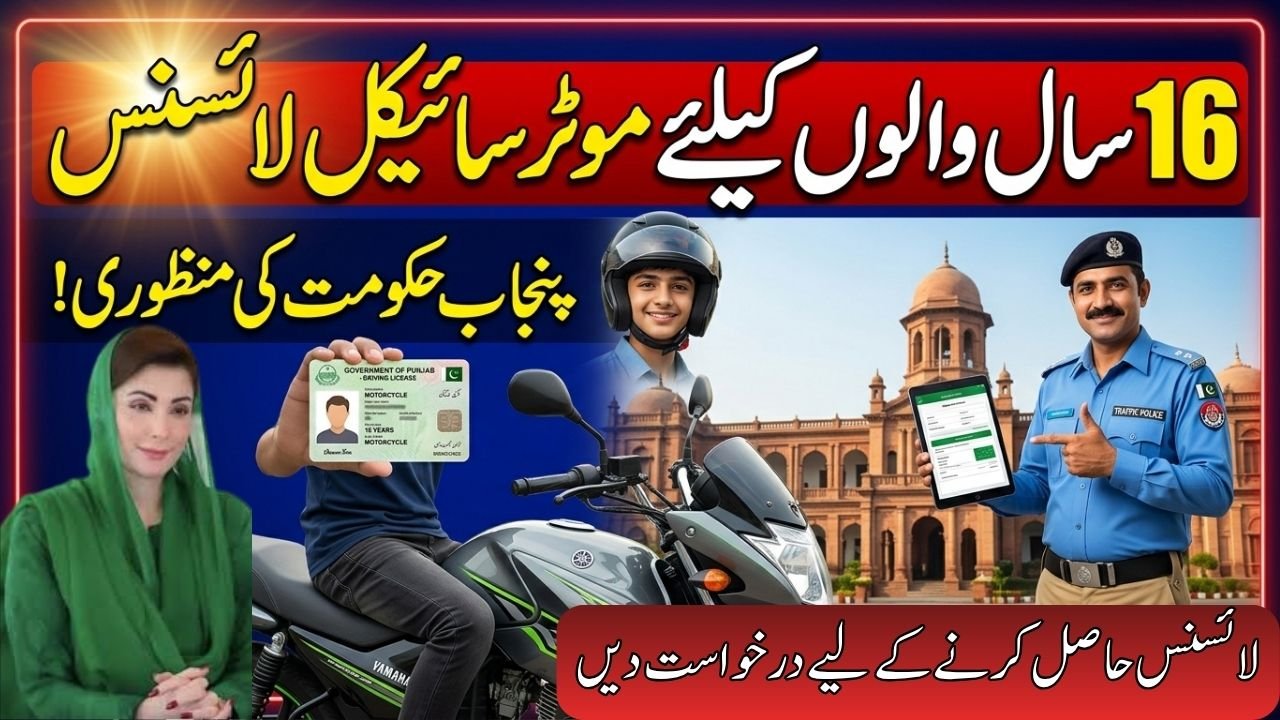
Punjab Approves Special Motorcycle Licenses
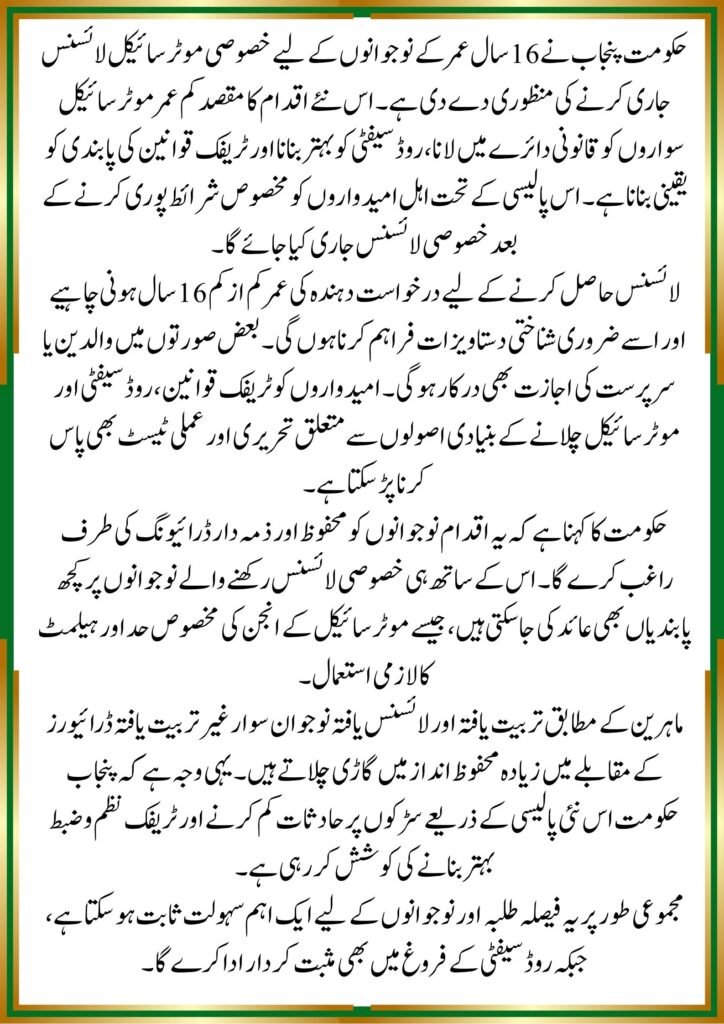
A major change is coming for young riders across Punjab. The provincial government has approved a special motorcycle licensing framework that allows eligible 16-year-olds to legally ride motorcycles under specific conditions.
For many families, this decision could make daily commuting easier, especially for students who travel long distances to schools, colleges, academies, and vocational institutes. At the same time, authorities have emphasized that road safety remains the top priority.
If you’re wondering who qualifies, what documents are required, and how the registration process works, this guide explains everything in simple terms.
Why Punjab Introduced Special Motorcycle Licenses for 16-Year-Olds
The government introduced this initiative after recognizing that thousands of teenagers already depend on motorcycles for transportation, particularly in semi-urban and rural areas.
Instead of allowing unlicensed riding, policymakers opted for a regulated system that provides legal authorization while enforcing safety requirements.
Improving Road Safety Through Regulation
Authorities believe that trained and licensed young riders are safer than untrained riders operating motorcycles illegally.
By bringing teenage riders into the licensing system, officials can:
- Verify rider identity
- Ensure traffic law awareness
- Reduce underage driving violations
- Promote helmet usage
- Improve accident prevention
Supporting Students and Young Commuters
Many students rely on motorcycles to travel between home and educational institutions.
The new licensing category aims to:
- Reduce transportation difficulties
- Provide legal riding status
- Encourage responsible driving habits
- Improve mobility in areas with limited public transport
Eligibility Criteria for the New Motorcycle License
Not every teenager will automatically qualify.
Applicants must meet specific conditions before they can apply.
Minimum Age Requirement
The applicant must be at least 16 years old at the time of application.
Age verification will be conducted through official records.
Valid Identity Documentation
Applicants are expected to provide:
- NADRA-issued identification document
- B-Form or Juvenile Card (where applicable)
- Parent or guardian verification if required
Medical Fitness
Authorities may require applicants to meet basic health standards that confirm they are physically capable of operating a motorcycle safely.
Educational and Residency Verification
Depending on implementation guidelines, proof of residence or student status may be requested during registration.
offichal website ; https://dlims.punjab.gov.pk/
What Type of Motorcycle Can a 16-Year-Old Ride?
One of the most common questions relates to motorcycle restrictions.
The special license is expected to focus on standard motorcycles within approved engine capacity limits.
Engine Capacity Restrictions
The government may impose limits on motorcycle engine size for young riders to reduce risk.
Examples could include:
- 70cc motorcycles
- 100cc motorcycles
- 125cc motorcycles (subject to final regulations)
Higher-powered motorcycles may remain restricted to older license holders.
Safety Equipment Requirements
Teen riders will likely be required to use:
- Approved safety helmets
- Reflective gear where applicable
- Proper footwear
- Functional motorcycle lights and mirrors
Failure to comply may result in penalties.
Registration Process for the Special Motorcycle License
The application process is designed to be straightforward while maintaining safety standards.
Step 1: Obtain Required Documents
Before visiting a licensing center, applicants should prepare:
- Identification documents
- Recent photographs
- Parent or guardian consent (if required)
- Residence verification documents
Step 2: Visit the Driving Licensing Authority
Applicants must visit their nearest licensing center and submit the required paperwork.
Officials will verify eligibility before processing the application.
Step 3: Complete the Learner Permit Stage
Many licensing systems begin with a learner permit.
During this phase, applicants learn:
- Road signs
- Traffic rules
- Motorcycle safety practices
- Defensive riding techniques
Step 4: Pass the Motorcycle Test
Applicants may be required to complete:
Theory Examination
The written test typically covers:
- Traffic regulations
- Road signs
- Safety awareness
- Rider responsibilities
Practical Riding Test
The practical assessment evaluates:
- Motorcycle control
- Turning ability
- Braking techniques
- Traffic awareness
- Safe riding behavior
Step 5: License Issuance
Once all requirements are successfully completed, the special motorcycle license will be issued.
Safety Rules Every Young Rider Must Follow
Obtaining a license is only the beginning.
Responsible riding habits are what truly reduce accidents.
Always Wear a Helmet
According to road safety experts worldwide, helmet use remains one of the most effective ways to reduce severe head injuries during motorcycle accidents.
Even short trips require proper protection.
Avoid Speeding
Young riders often underestimate stopping distances.
Maintaining safe speeds provides more reaction time and reduces crash severity.
Never Use Mobile Phones While Riding
Distracted driving remains one of the leading causes of road accidents.
Phones should never be used while operating a motorcycle.
Benefits of the New Licensing System
The policy offers several advantages for both families and government authorities.
Legal Riding Authorization
Teenagers can ride motorcycles legally after completing the required process.
Improved Traffic Compliance
Licensed riders are more likely to understand and follow traffic regulations.
Better Road Safety Education
Formal training teaches skills that many self-taught riders never learn.
Reduced Underage Driving Violations
Instead of operating motorcycles illegally, eligible teenagers can participate in a regulated system.
What Parents Should Consider Before Allowing Teen Riders
Parents play a critical role in developing safe riding habits.
Assess Maturity Before Granting Access
Age alone does not determine readiness.
Parents should evaluate whether a teenager demonstrates:
- Responsibility
- Decision-making ability
- Traffic awareness
- Consistent safety behavior
Choose a Suitable Motorcycle
A lightweight motorcycle is often easier for beginners to handle than a heavier or more powerful model.
Encourage Ongoing Practice
Even after licensing, supervised practice can help young riders build confidence and improve skills.
People Also Ask (PAA)
Can a 16-year-old legally ride a motorcycle in Punjab?
Yes. Under the newly approved framework, eligible 16-year-olds may obtain a special motorcycle license after meeting licensing requirements and safety conditions.
What documents are required for a motorcycle license at age 16?
Applicants generally need identity documents, photographs, proof of age, and any additional documents specified by licensing authorities.
Is a driving test required for the special motorcycle license?
Yes. Applicants are expected to complete both theoretical and practical assessments before receiving a license.
Are there restrictions on motorcycle engine size?
Authorities may impose engine-capacity limits to ensure safer operation by younger riders.
Can parents be held responsible for traffic violations?
Depending on legal provisions and specific circumstances, guardians may face responsibilities related to underage or unauthorized motorcycle use.
Will helmet use be mandatory?
Yes. Helmet compliance is expected to remain a core requirement under Punjab traffic regulations.
Where can applicants submit their motorcycle license application?
Applications can typically be submitted at designated Driving Licensing Authority centers operating within Punjab.
Expert Insights on Teen Motorcycle Licensing
Road safety researchers consistently emphasize that structured training significantly improves rider awareness and hazard recognition.
Studies from multiple countries have shown that licensing systems combining classroom education, learner permits, and practical testing tend to reduce accident rates among younger drivers.
Transportation experts also note that gradual licensing frameworks are more effective than unrestricted access because they balance mobility needs with safety objectives.
This is why Punjab’s approach focuses on eligibility checks, testing procedures, and responsible riding standards rather than unrestricted motorcycle access.
Final Thoughts
Punjab’s decision to approve special motorcycle licenses for 16-year-olds marks an important shift in transportation policy. The initiative acknowledges the realities faced by students and young commuters while introducing safeguards designed to improve road safety.
For teenagers, the new system creates a legal path toward motorcycle riding. For parents, it offers greater confidence that young riders are receiving proper training and oversight. Most importantly, it encourages a culture of responsible and educated road use.
Anyone planning to apply should stay updated with official announcements from licensing authorities, as implementation details, documentation requirements, and eligibility conditions may be refined over time.
Frequently Asked Questions (FAQs)
1. What is the minimum age for the new motorcycle license in Punjab?
The minimum age is 16 years.
2. Will applicants need a learner permit first?
Most likely, yes, depending on final implementation guidelines.
3. Is parental permission required?
Authorities may require guardian consent for applicants under 18.
4. Can a 16-year-old ride any motorcycle?
Engine-capacity restrictions may apply.
5. Are practical driving tests mandatory?
Yes, practical assessments are expected to be part of the process.
6. Will helmet use be compulsory?
Yes, helmet use remains a key safety requirement.
7. Where can I apply for the special motorcycle license?
Applications will generally be processed through authorized Driving Licensing Authority centers.