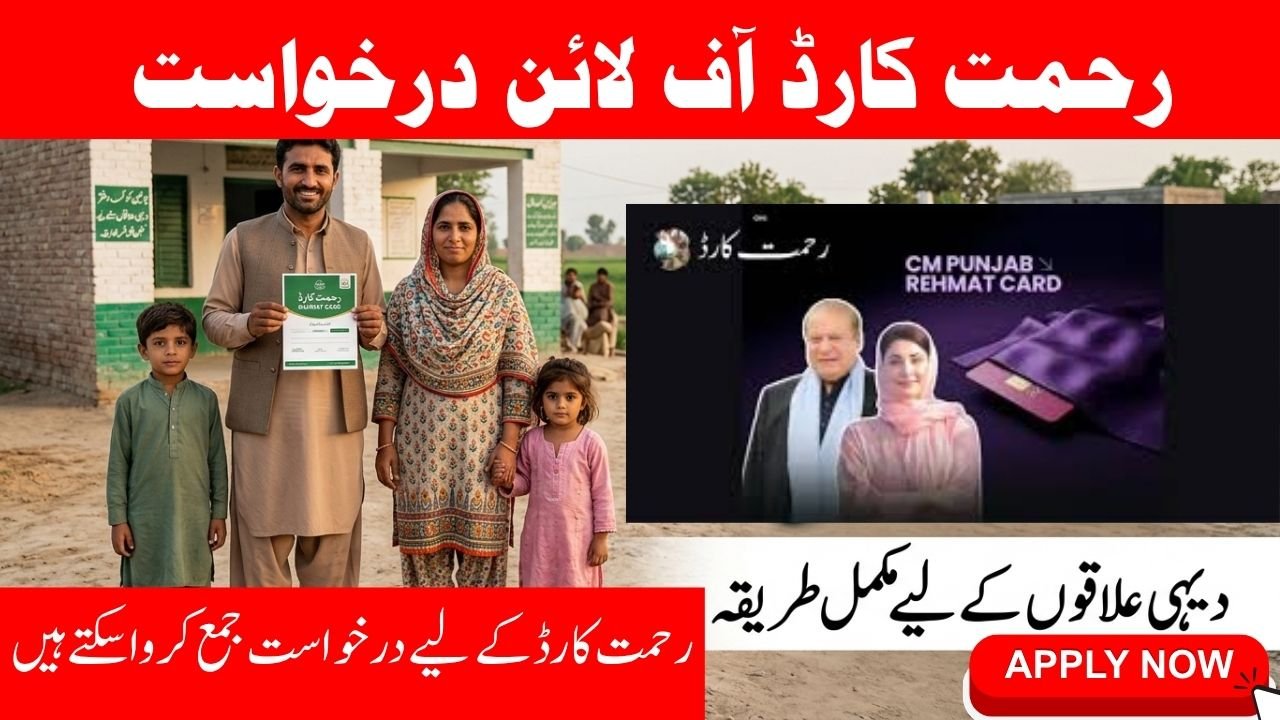
Rahmat Card Offline Application
For many families living in Punjab’s villages, accessing online government services can be difficult. Internet connectivity issues, limited digital literacy, and lack of smartphones often create barriers when applying for welfare programs. This is where the Rahmat Card offline application process becomes extremely valuable.
The Punjab government has introduced offline registration facilities to ensure deserving families from rural areas can apply without needing online portals or mobile apps. If you live in a village and want to understand how to apply for a Rahmat Card through physical registration centers, this guide explains every step in simple language.
What Is the Rahmat Card Program?
The Rahmat Card is a welfare initiative designed to support financially vulnerable families by providing access to government assistance and social protection benefits.
The scheme aims to ensure that deserving households, particularly those living in underserved rural communities, receive financial support through a transparent verification system.
Why Was the Offline Application System Introduced?
Many residents of rural Punjab face challenges such as:
- Limited internet access
- Lack of smartphones or computers
- Low digital literacy
- Distance from urban registration facilities
To solve these issues, the government established offline registration channels where applicants can complete the process in person.
Who Benefits Most From Offline Registration?
Offline registration is especially helpful for:
- Farmers
- Daily wage workers
- Widows
- Elderly citizens
- Persons with disabilities
- Low-income households in remote villages
Eligibility Criteria for Rahmat Card Applicants
Before visiting a registration center, make sure you meet the basic eligibility requirements.
Basic Eligibility Requirements
Applicants generally need to:
- Be permanent residents of Punjab
- Possess a valid CNIC
- Belong to a low-income household
- Meet government-defined poverty assessment criteria
- Not be receiving conflicting government assistance programs if restricted by policy
Documents Required for Verification
Keep these documents ready:
- Original CNIC
- Copies of CNIC
- Family registration details
- Mobile number (if available)
- Proof of residence when required
- Supporting documents for special categories such as widows or disabled persons
Importance of Accurate Information
One of the most common reasons for application delays is incorrect information. Ensure all details match official records maintained by NADRA and local authorities.
Where Can Rural Residents Apply Offline for Rahmat Card?
The government has created multiple registration points to make the application process accessible.
Union Council Offices
Many applicants begin their registration journey through local Union Council offices.
These offices often provide:
- Application guidance
- Verification support
- Information regarding eligibility
- Referral to designated registration centers
District Facilitation Centers
District-level facilitation centers handle larger volumes of applications and verification requests.
These centers typically offer:
- Document review
- Applicant registration
- Eligibility assessment
- Status updates
Mobile Registration Camps
In some rural districts, temporary registration camps may be organized.
These camps help residents living far from administrative offices and reduce travel expenses.
Step-by-Step Rahmat Card Offline Application Process
Understanding the process beforehand can save time and prevent unnecessary visits.
Step 1: Gather Required Documents
Before leaving home, prepare all required documents.
Checklist Before Visiting a Center
- Original CNIC
- Photocopies of CNIC
- Household information
- Contact details
- Supporting eligibility documents
Missing documents can delay your application.
offichal websote ; https://punjab.gov.pk/rahmat-card
Step 2: Visit the Nearest Registration Center
Go to the designated office during working hours.
Registration staff will review your documents and explain the process.
Step 3: Complete the Application Form
Applicants are required to provide:
- Full name
- CNIC number
- Address
- Family details
- Income-related information
Fill out the form carefully and honestly.
Step 4: Verification Process
Officials may verify:
- Identity records
- Household information
- Income indicators
- Residency details
This step helps ensure benefits reach deserving families.
Step 5: Receive Application Reference Details
After submission, applicants may receive:
- Registration slip
- Tracking number
- Reference receipt
Keep this document safe for future inquiries.
How Long Does Rahmat Card Approval Take?
Approval timelines can vary depending on district workload and verification requirements.
Typical Processing Timeline
Most applications pass through several stages:
- Submission
- Initial review
- Data verification
- Eligibility assessment
- Approval decision
Applicants should expect some waiting time while records are verified.
Factors That May Cause Delays
Common reasons include:
- Incomplete documents
- Incorrect CNIC information
- Verification mismatches
- High application volume
Tips to Avoid Delays
- Double-check documents
- Provide accurate information
- Keep photocopies ready
- Follow instructions from registration staff

Common Challenges Faced by Rural Applicants
Even with offline registration, some challenges still exist.
Distance From Registration Centers
Residents in remote villages may need to travel significant distances.
Whenever possible, monitor announcements regarding mobile registration camps operating in nearby areas.
Lack of Awareness
Many eligible families remain unaware of registration opportunities.
Community leaders, local government offices, and social welfare representatives often play an important role in spreading information.
Documentation Issues
Some applicants face problems because:
- CNIC records are outdated
- Family information is incomplete
- Address records do not match official databases
Resolving these issues before applying can significantly improve approval chances.
Expert Insights for Successful Registration
Based on how welfare enrollment programs typically operate across Pakistan, preparation is often the biggest factor determining whether an application moves smoothly through verification.
Expert Tip #1: Verify NADRA Records First
Any mismatch between your application and official identity records can slow the process.
Checking your information beforehand can prevent unnecessary delays.
Expert Tip #2: Keep Multiple Copies of Documents
Experienced registration officers frequently recommend carrying extra photocopies.
This simple step can save an additional trip to the registration center.
Expert Tip #3: Apply Early
Whenever a government assistance program opens registration, early applicants often experience shorter queues and faster processing times.
Real-World Example: A Rural Family’s Application Journey
Consider a farming family living in a small village outside a district headquarters.
The family has limited internet access and no experience using government portals. Instead of attempting online registration, they visit a nearby facilitation center with their CNICs and supporting documents.
Officials assist them in completing the application form, verify their details, and provide a registration receipt. After verification, the family becomes eligible for benefits without ever needing to navigate an online system.
This example demonstrates why offline registration remains essential for rural communities.
People Also Ask (PAA)
Can I apply for a Rahmat Card without internet access?
Yes. The offline application system is specifically designed for applicants who do not have reliable internet access.
Is there a fee for Rahmat Card offline registration?
Applicants should follow official government instructions. Legitimate welfare registrations are generally processed through authorized centers.
What documents are required for Rahmat Card registration?
A valid CNIC, household information, and any supporting eligibility documents are commonly required.
Can someone else submit my application?
Policies may vary. In some situations, authorized family representatives may assist, but applicants should verify requirements with the registration center.
How can I check my application status?
Applicants can usually use the reference number provided during registration to inquire about progress.
Are mobile registration camps available in villages?
Some districts organize temporary registration camps to assist residents in remote areas.
What should I do if my application is rejected?
Review the reason for rejection, correct any documentation issues, and follow the appeal or reapplication process provided by officials.
Final Thoughts
The Rahmat Card offline application process plays a vital role in ensuring that rural communities across Punjab are not excluded from government welfare initiatives. By providing registration facilities through Union Councils, facilitation centers, and mobile camps, the system helps bridge the gap between public services and underserved populations.
Applicants who prepare their documents, verify their information, and follow the official registration process carefully are far more likely to experience a smooth application journey. For families living in villages where internet access remains limited, offline registration continues to be one of the most practical and accessible pathways to receiving government assistance.