Benazir Nashonuma Program
If you are a pregnant woman or a mother of a child under two years in Pakistan, the Benazir Nashonuma Program Online Registration 2026 can feel like a lifeline. This program is not just about cash it is about ensuring healthier mothers, stronger babies, and a future with less malnutrition.
The real challenge most families face is not awareness, but confusion: How do I apply? Am I eligible? Is registration online or offline?
Let’s clear everything step by step in a practical, human way.
What is Benazir Nashonuma Program? (Understanding the Purpose First)
The Benazir Nashonuma Program is a conditional cash transfer initiative under the Benazir Income Support Programme (BISP). Its core goal is to fight stunting and malnutrition among children under 2 years in Pakistan.
Instead of just giving financial aid, the program links support with health actions like:
- Regular antenatal checkups for pregnant women
- Timely vaccinations for children
- Nutrition awareness sessions
- Growth monitoring at health centers
Why this program matters in 2026
Pakistan continues to struggle with child malnutrition rates. According to nutrition research patterns observed in South Asia, early childhood nutrition directly affects:
- Brain development
- School performance
- Long-term immunity
Experts in public health often highlight that the first 1,000 days of a child’s life (pregnancy to age 2) are the most critical window. Nashonuma directly targets this phase.
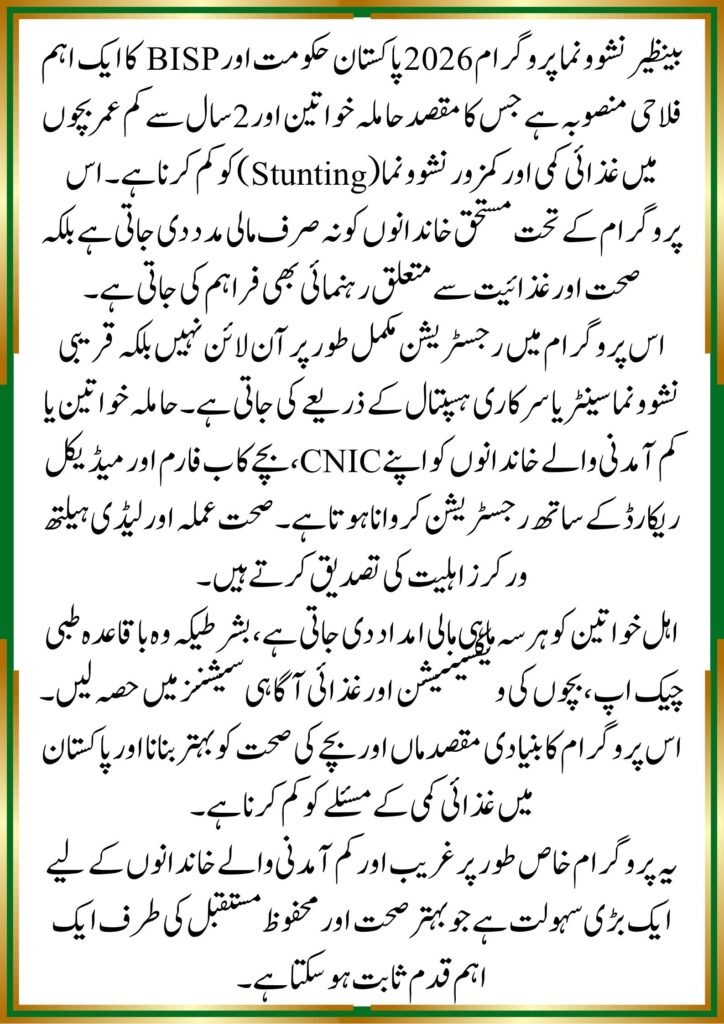
Benazir Nashonuma Program Online Registration 2026 – How It Actually Works
Many people search for “online registration,” but here’s the reality in 2026:
The program does not fully support direct online registration like a form submission website.
Instead, the process is center-based and verification-driven through BISP and health facilities.
Step-by-Step Registration Process
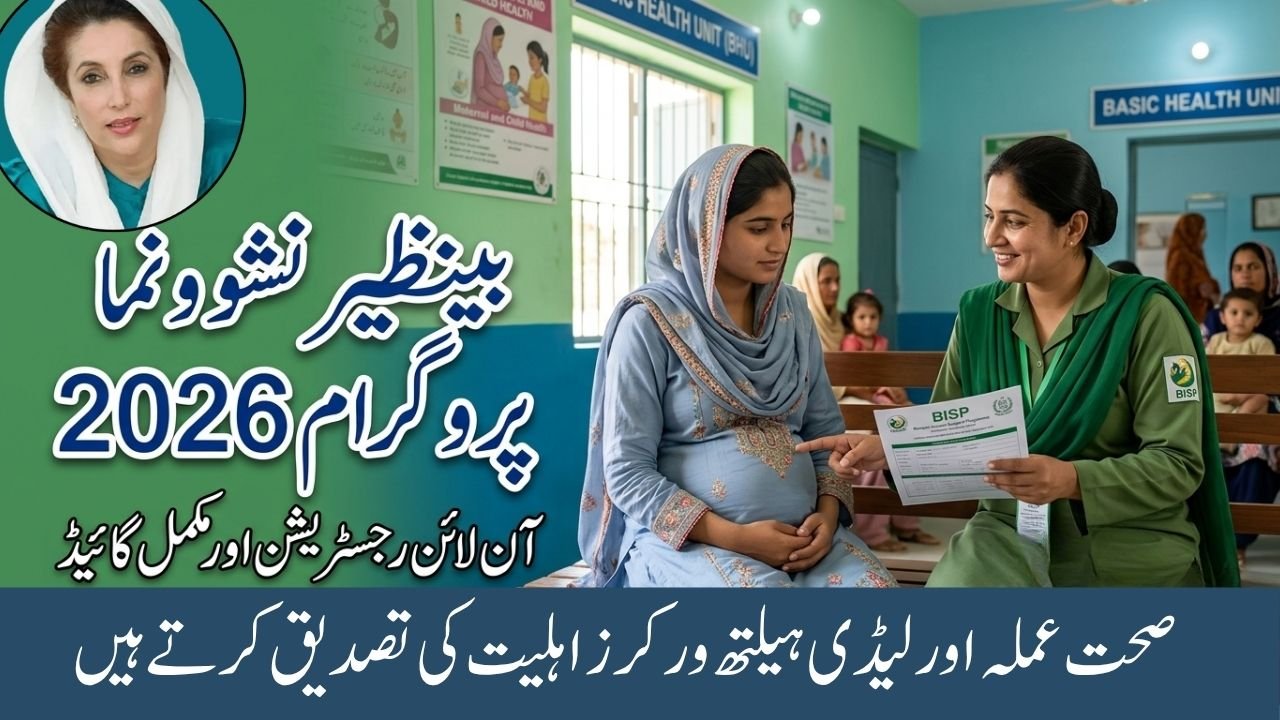
Step 1: Visit the nearest Nashonuma Center
These are usually located in:
- Government hospitals
- Tehsil/District health facilities
- BISP-designated centers
Step 2: Carry required documents
You need:
- CNIC of mother
- Child’s B-Form (if already born)
- Pregnancy report (for expecting mothers)
- Husband’s CNIC (sometimes required for verification)
Step 3: Medical and eligibility check
Health staff (often Lady Health Workers) verify:
- Pregnancy status
- Child’s age (must be under 2 years)
- Nutritional risk factors
Step 4: Enrollment confirmation
Once approved:
- You are enrolled in the program
- A tracking system is created for health visits
Step 5: Cash assistance begins
Payments are issued after compliance with:
offichal website ; https://bisp.gov.pk/
- Checkups
- Vaccination schedule
- Nutrition counseling sessions
Eligibility Criteria for Nashonuma Program 2026
Eligibility is strictly defined to ensure support reaches the most vulnerable families.
Who can apply?
Pregnant Women
- Must belong to a low-income household
- Must be registered in BISP/Kafalat system
Lactating Mothers
- With infants under 6 months
- Must follow health center visits
Children under 2 years
- Must have growth monitoring record
- Must receive routine immunizations
Who is NOT eligible?
- Families not registered in BISP database
- Children above 2 years
- Cases missing medical verification
- Households with higher income bracket (as per BISP scoring system)
Benefits of Benazir Nashonuma Program 2026
This program is more than financial aid it’s a preventive health intervention model.
Financial Support
Eligible mothers receive quarterly stipends, which help with:
- Nutritious food purchases
- Transportation to health centers
- Basic medical expenses
Health & Nutrition Benefits
Improved maternal nutrition
Women receive:
- Iron and folic acid supplements
- Dietary guidance
Child growth monitoring
Each visit tracks:
- Height
- Weight
- Development milestones
Vaccination support
Ensures full immunization coverage, reducing disease risks.
Real-world impact example
In rural Punjab and Sindh regions, health workers have reported that regular follow-ups under Nashonuma significantly reduced cases of low birth weight babies in participating communities.
This aligns with global WHO frameworks on conditional nutrition support programs, which show improved child survival rates when cash assistance is linked with healthcare compliance.
How to Check Registration Status in 2026
Even though full online registration is limited, you can still check your status.
Option 1: Visit BISP Office
- Provide CNIC
- Ask for Nashonuma enrollment verification
Option 2: SMS Service (if active in your area)
- Send CNIC to designated BISP code
- Wait for eligibility response
Option 3: Health Center Tracking
- Visit the same center where registration was done
- Staff can verify your record in the system
Common Issues & Solutions in Registration
Problem 1: CNIC not recognized
This usually happens when:
- Your BISP data is not updated
- You are not registered in Kafalat program
Solution: Update your details at BISP office.
Problem 2: No nearby center available
Some rural areas may not have dedicated Nashonuma centers.
Solution: Visit district headquarters hospital or contact Lady Health Worker network.
Problem 3: Payment delay
Delays often occur due to:
- Missed checkups
- Vaccination gaps
- System verification delays
People Also Ask
What is Benazir Nashonuma Program 2026?
It is a government initiative under BISP that provides cash and nutrition support to pregnant women and children under 2 years to prevent stunting.
Can I apply online for Nashonuma Program?
No full online application exists. Registration is done through health centers and BISP facilitation offices.
How much money is given in Nashonuma Program?
Payments vary based on eligibility category, but they are provided quarterly after health condition compliance.
Is CNIC required for registration?
Yes, valid CNIC of the mother is mandatory along with child’s birth documents.
Who runs the Nashonuma Program?
It is managed by the Benazir Income Support Programme (BISP) in collaboration with public health departments.
What is the age limit for children?
Children must be under 2 years to remain eligible for benefits.
Expert Insights on Nashonuma Program
Public health experts often emphasize three key principles behind programs like Nashonuma:
- Preventive care is cheaper than treatment – Early nutrition reduces long-term healthcare costs.
- Conditional cash transfers improve compliance – Linking money with health behavior increases participation rates.
- First 1000 days approach is critical – This is globally recognized in child development science.
According to nutrition policy frameworks used worldwide, such programs significantly reduce stunting rates when consistently implemented over 3–5 years.
Conclusion
The Benazir Nashonuma Program Online Registration 2026 is not just a welfare scheme—it is a structured effort to reshape maternal and child health outcomes in Pakistan.
While the process is not fully online, it is designed to ensure accountability and real medical supervision. If you are eligible, the best step is simple: visit your nearest health or BISP center with your documents and complete registration.
Small steps taken during pregnancy and early childhood often decide lifelong health. This program tries to make sure those steps are supported, not missed.
FAQ – Benazir Nashonuma Program 2026
1. Is the Nashonuma program still active in 2026?
Yes, it continues under BISP with updated health monitoring systems.
2. Can fathers apply for the program?
No, only mothers and children are enrolled as beneficiaries.
3. Is there any fee for registration?
No, registration is completely free.
4. What documents are required?
CNIC, child B-Form, and medical/pregnancy records.
5. Where can I register?
At designated Nashonuma centers in government hospitals or BISP facilities.
6. How often are payments given?
Payments are typically issued quarterly after compliance checks.
7. What happens if I miss a checkup?
Missing health visits may delay or suspend payments until compliance is restored.