CM Punjab Directs Early Completion
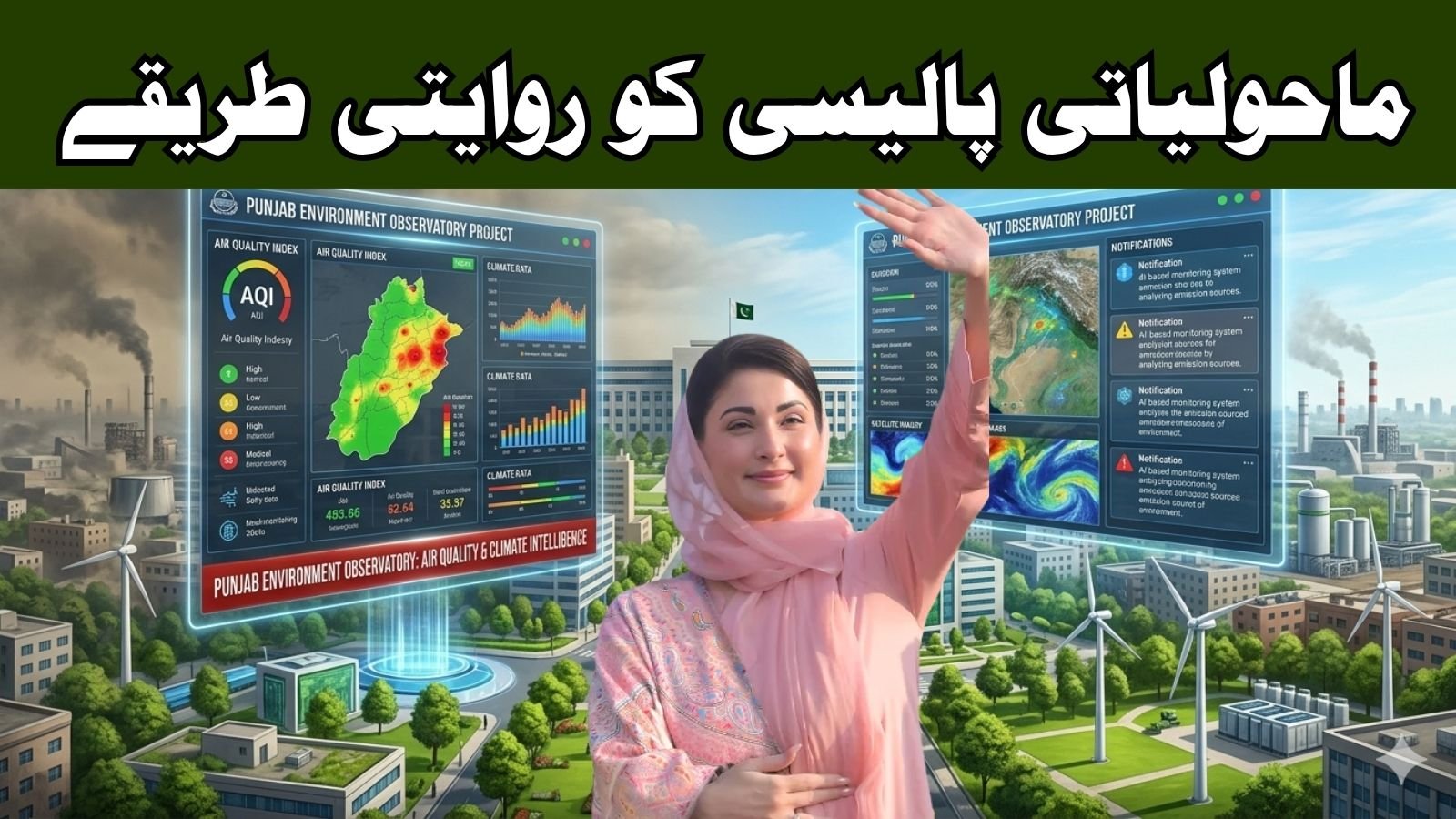
Punjab is preparing to launch its first-ever Environment Observatory Project, and the directive for early completion from Maryam Nawaz Sharif has added urgency to an already ambitious initiative.
At its core, the project aims to build a centralized environmental intelligence system for Punjab, combining air quality monitoring, climate modeling, satellite imaging, and real-time pollution tracking under one digital umbrella.
What makes this development important is not just its scale but its timing. Punjab’s urban centers are increasingly struggling with smog episodes, heatwaves, and groundwater stress. This observatory is designed to shift environmental management from reactive response to predictive action.
Why Punjab Needs an Environment Observatory Now
Rising Smog and Air Pollution Crisis
Anyone living in Lahore or surrounding industrial belts already knows the problem: air quality drops sharply during winter months. But the issue is no longer seasonal it’s structural.
Data from environmental agencies consistently shows that particulate matter (PM2.5) levels in major cities of Punjab frequently exceed safe thresholds recommended by the World Health Organization.
The observatory is expected to integrate continuous AQI monitoring stations, helping policymakers respond before pollution peaks not after.
Climate Change Is No Longer a Future Threat
Heatwaves in Punjab are becoming longer and more intense. Rainfall patterns are shifting unpredictably, affecting agriculture the backbone of the provincial economy.
Climate experts emphasize that without predictive modeling systems, governments remain locked in a cycle of emergency response. An observatory helps break that cycle by turning raw environmental data into actionable insights.
Data Fragmentation Has Been a Major Barrier
Right now, environmental data in Pakistan is scattered across departments:
- Meteorological data from one system
- Pollution data from another
- Satellite data in separate silos
The observatory aims to unify this fragmented ecosystem into a single decision-making dashboard.
Inside the Punjab Environment Observatory Project
Digital Infrastructure and Smart Monitoring Systems
At the heart of the project lies a digital command system that collects environmental data in real time.
This includes:
- Air quality sensors across urban and rural zones
- Satellite-based land and weather monitoring
- IoT-enabled water and soil testing devices
Experts suggest that integrating IoT with environmental governance can reduce response delays by up to 40–60% in pollution control scenarios.
Role of Artificial Intelligence and Predictive Analytics
One of the most advanced features of the observatory is expected to be AI-driven forecasting.
Instead of simply showing current pollution levels, the system will:
- Predict smog formation 48–72 hours in advance
- Identify pollution hotspots before escalation
- Suggest mitigation actions to authorities
Globally, cities like Singapore and Seoul already use similar predictive environmental systems, reducing crisis response time significantly.
Integration with National Climate Frameworks
The project is not isolated. It is expected to align with:
- Pakistan’s national climate adaptation strategy
- UN Sustainable Development Goals (SDGs), especially SDG 13 (Climate Action)
- Regional disaster management frameworks
This alignment ensures that Punjab’s environmental governance is not only local but globally benchmarked.
Policy Impact and Governance Transformation
Smarter Decision-Making for Government Institutions
One of the biggest benefits of the observatory is decision automation support for policymakers.
Instead of relying on delayed reports, officials will have access to:
- Live environmental dashboards
- Predictive alerts
- Sector-wise pollution analysis
This can significantly improve governance efficiency, especially in crisis situations like smog emergencies or floods.
Strengthening Environmental Enforcement
Environmental enforcement in Punjab has often been criticized for being reactive. With real-time data, authorities can:
- Identify industrial polluters faster
- Track illegal emissions in real time
- Enforce environmental laws with stronger evidence
This data-backed enforcement model reduces loopholes and improves accountability.
Supporting Urban Planning and Infrastructure
Urban planners can use observatory data to:
- Design cleaner transportation routes
- Improve industrial zoning policies
- Plan green belts and urban forests more effectively
In the long run, this shifts Punjab toward a “smart environment city” model
Expert Insights: Why This Project Matters
Data-Driven Governance is the Future
Environmental policy experts agree that modern governance depends on real-time data ecosystems. Without it, even the best policies fail due to delayed implementation.
The Punjab observatory reflects a shift from intuition-based governance to evidence-based governance.
Climate Resilience Requires Predictive Systems
According to global climate frameworks used by the IPCC (Intergovernmental Panel on Climate Change), early warning systems are one of the most effective tools for reducing climate-related damage.
The observatory directly supports this principle by enabling early alerts for:
- Smog formation
- Heatwaves
- Flood risks
Digital Environmental Systems Improve Public Health Outcomes
Studies from environmental health organizations show a direct link between air quality monitoring systems and reduced respiratory diseases in urban populations.
By enabling rapid response to pollution spikes, Punjab could see long-term public health improvements.
Challenges in Implementation
Infrastructure Gaps in Rural Areas
While urban centers may be well-covered, rural monitoring stations are often limited. Expanding coverage evenly will be critical.
Data Integration Complexity
Merging multiple government datasets into a unified system is technically challenging. It requires:
- Standardized formats
- Inter-departmental coordination
- Strong cybersecurity protocols
Long-Term Maintenance and Funding
Many public sector tech projects fail due to lack of long-term maintenance planning. Sustaining the observatory will require continuous investment in:
- Sensor upgrades
- Data servers
- Technical staff training
What This Means for the Future of Punjab
A Shift Toward Climate Intelligence
Punjab is moving from traditional environmental management to climate intelligence—a system where data predicts problems before they happen.
Potential Model for Other Provinces
If successful, this project could be replicated in:
- Sindh
- Khyber Pakhtunkhwa
- Balochistan
Stronger Public Awareness
With open environmental dashboards, citizens will also gain access to real-time pollution data, increasing public pressure for cleaner policies.
(People Also Ask)
What is the Punjab Environment Observatory Project?
It is a centralized digital system designed to monitor air quality, climate patterns, and environmental conditions in real time across Punjab.
Why is the Environment Observatory important for Punjab?
Because it helps address smog, climate change, and pollution through predictive data and real-time monitoring.
How will the project help reduce smog in Punjab?
It will forecast smog conditions in advance, allowing authorities to take preventive actions before pollution peaks.
Who launched the Environment Observatory initiative?
The project has been prioritized under the directive of Maryam Nawaz Sharif.
Will the public have access to environmental data?
Yes, the system is expected to include public dashboards showing air quality and environmental indicators.
Can this system improve climate policies in Pakistan?
Yes, it enables evidence-based policymaking and aligns with global climate monitoring standards.
Conclusion
The Punjab Environment Observatory Project is not just another infrastructure initiative—it is a shift in how governance understands the environment. By combining real-time monitoring, AI forecasting, and integrated data systems, Punjab is stepping into a future where environmental decisions are driven by intelligence rather than reaction.
If implemented effectively, this project could redefine climate governance not only in Punjab but across Pakistan.